
The United States Continues to Support a Mine-Free Sri Lanka
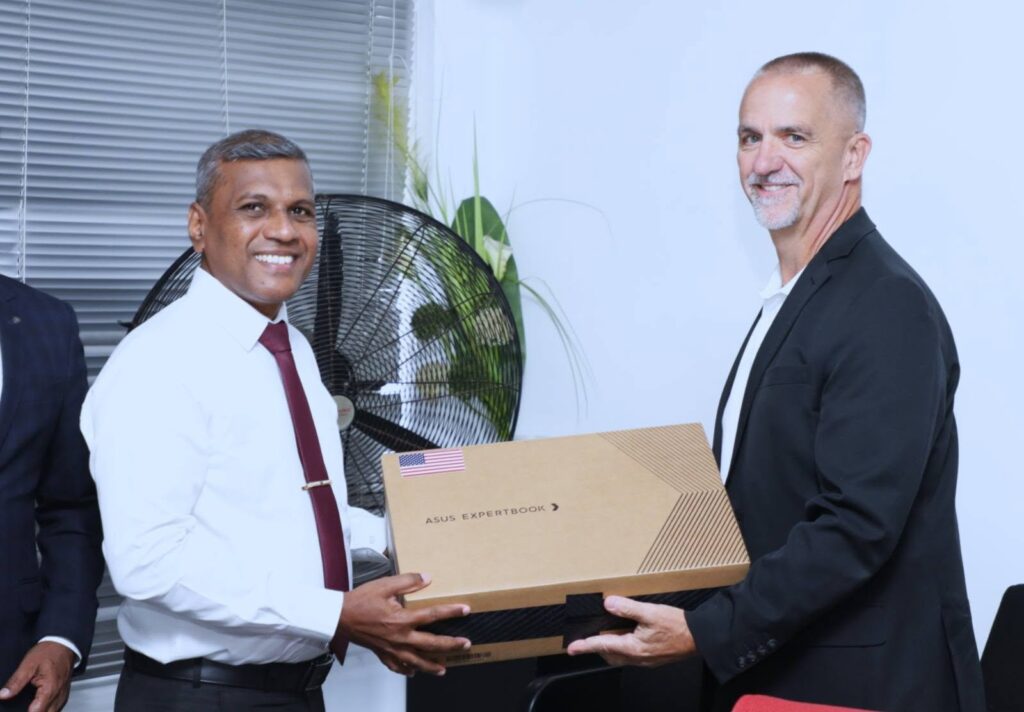
The United States Continues to Support a Mine-Free Sri Lanka A high-level meeting was chaired today (June 8, 2026) by the Hon. Minister of Housing, Construction, and Water Supply, Dr. Susil Ranasinghe, at the Ministry premises to review the progress of Sri Lanka’s National Mine Action Programme The discussion was joined by Mr. Keith D. Clark, Program Manager of the U.S. Department of State’s Office of Weapons Removal and Abatement (PM/WRA), and Mr. Patrick Collins, Political Officer of the U.S. Embassy in Sri Lanka. Key Highlights of the Discussion: Transition & Completion Plans: As Sri Lanka moves closer to achieving a mine-impact-free status, the meeting focused on future transition strategies and final phase completion plans. A Longstanding Partnership: Since 2002, PM/WRA has been the primary international donor supporting Sri Lanka’s demining efforts. By helping clear nearly 1 million landmines and explosive remnants of war, U.S. assistance has been instrumental in creating the conditions for the safe return and resettlement of more than 1 million internally displaced persons (IDPs). LKR 12.5 Million IT Donation: To boost data management and operational efficiency, IT equipment worth over LKR 12.5 million was officially handed over to the National Mine Action Center (NMAC) and its regional offices. $8.5 Million Commitment for 2026: To support the 2023–2027 Mine Action Completion Strategy, the U.S. PM/WRA reaffirmed its commitment by pledging approximately USD 8.5 million for 2026, with plans to extend support for another two years (subject to annual approvals). Sri Lanka remains deeply committed to achieving a mine-free status through data-driven, strategic operations, ensuring safe lands for communities and future development. The meeting was also attended by the Ministry Secretary / National Director of NMAC, Additional Secretary of the Ministry, Deputy Director of NMAC, IM Advisor GICHD/NMAC, representatives from the U.S. Embassy, demining operators, and key stakeholders. #Srilanka #USA #NMAC #Development #SafetyFirst #SusilRanasinghe
Sri Lanka Showcases Progress at NDM-UN29 in Geneva
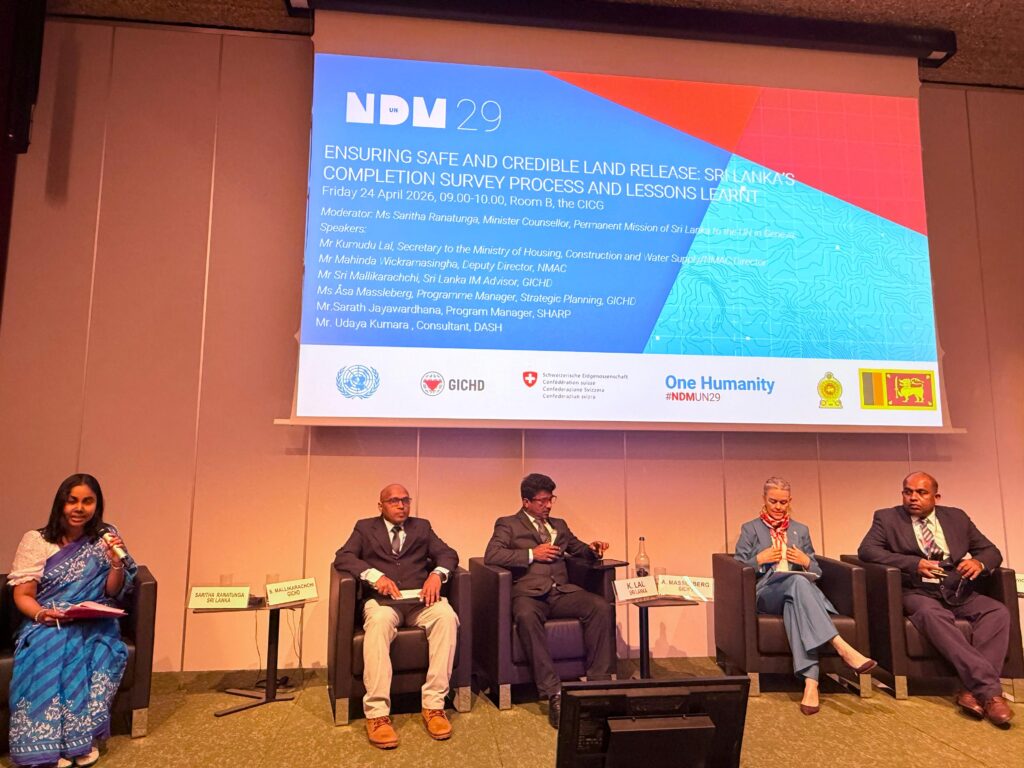
Sri Lanka Showcases Progress at NDM-UN29 in Geneva The Sri Lanka delegation attended and presented at the 29th International Meeting of Mine Action National Directors and United Nations Advisers (NDM-UN29), held from 22–24 April 2026 at the International Conference Center Geneva (CICG). The meeting was convened by the United Nations Inter-Agency Coordination Group on Mine Action (IACG-MA) and co-hosted with the Geneva International Centre for Humanitarian Demining (GICHD), with the generous support of the Swiss Federal Department of Foreign Affairs. The delegation was led by Eng. L. Kumudu Lal Bogahawatta, Secretary to the Ministry of Housing, Construction and Water Supply, and National Director of Mine Action. Members of the delegation included Mr. Mahinda Wickramasingha, Deputy Director of Mine Action, Mr. B.Sri Mallikarachchi, IM Advisor, GICHD/NMAC, along with representatives from Sri Lanka’s local demining organizations, including Colonel Sarath Jayawardhana (Retired) (Director/ Programme Manager, SHARP), General Sumith Balasuriya (Retired) Director/ Field Reporting Officer, and Major General Udaya Kumara (Retired), Donor and Stakeholder Manager from DASH. The delegation also held bilateral discussions with key officials from the HALO Trust and MAG, both of which have played a vital role in Sri Lanka’s mine action programme since its inception. Although they were not part of the official Sri Lankan delegation, their longstanding operational presence and technical contributions remain essential to the programme’s progress. The delegation actively participated in NDM-UN29, sharing Sri Lanka’s progress, current status, and future priorities in mine action. Discussions focused on securing sustained funding and strengthening international partnerships to achieve national targets and meet global obligations. Throughout the forum, the Sri Lankan delegation engaged with donor countries, international organizations, NGOs, and the Sri Lankan Mission in Geneva. These engagements highlighted Sri Lanka’s success as a mine action case study and demonstrated its commitment to completing clearance efforts across the country. A side event titled “Ensuring Safe and Credible Land Release: Sri Lanka’s Completion Survey Process and Lessons Learnt” was held on 24 April 2026. The event was attended by H.E. Sumith Dassanayake, Ambassador and Permanent Representative of Sri Lanka to the United Nations in Geneva, along with high-level officials from donor countries, international organizations, programme managers, country directors, researchers, academics, and members of the Sri Lanka Mission. Speaking at the side event, National Director of Mine Action of Sri Lanka, Eng. Kumudu Lal Bogahawatta, Secretary of the Ministry of Housing, Construction and Water Supply, along with panelists from NMAC and GICHD, shared updates on Sri Lanka’s Mine Action Strategy and the Completion Survey Dashboard. They also discussed the progress and ongoing challenges of the country’s Mine Action Programme. Highlighting key concerns, Ms. Åsa Massleberg, Programme Manager and Senior Advisor for the Strategic Planning Programme, GICHD and the National Director emphasized that Sri Lanka is facing significant challenges due to funding shortfalls compared to previous years, as well as the discovery of previously unknown contamination. These factors make it unrealistic to achieve planned targets within the expected timelines. Accordingly, based on current funding forecasts and established financial planning tools, the National Director noted that, following consultations and analysis, the Government of Sri Lanka (GoSL) is expected to request an extension of its mine action deadline by March 2027. The Deputy Director and Information Management (IM) Advisors explained how Sri Lanka is conducting the completion survey process, underscoring its importance to the Mine Action Programme. Key elements include real-time monitoring, structured workflow validation, and enhanced data transparency and accountability. These ensure that the completion survey process remains credible, traceable, and aligned with international standards. The SHARP Programme Manager highlighted that one of the major challenges affecting the ongoing Completion Survey is the shortfall of funding. As a demining operator in Sri Lanka, SHARP has been directly impacted by these financial constraints. Not only SHARP but all the other operators HALO Trust, MAG and DASH will be directly impacted with reduction and unemployment of cadres, and also extend the completion date beyond the Article 5 deadline and impose a strain on the remaining donors The DASH Consultant further emphasized DASH’s role in supporting mine action through a data-driven approach. Given that the completion process relies heavily on robust information management, accurate data systems—such as IMSMA—are essential for documenting cleared areas, defining final perimeters, and incorporating newly identified contamination into the national strategy. The Donor and Stakeholder Manager elaborated on how DASH contributes to the National Mine Action Programme by strengthening data collection, analysis, and reporting mechanisms. The session was moderated by Ms. Saritha Ranatunga, Minister-Counsellor, and provided an opportunity to showcase Sri Lanka’s achievements, ongoing challenges—including funding constraints—and its continued commitment to fulfilling Article 5 obligations and achieving a mine-free status. Sri Lanka reaffirmed its dedication to advancing its Mine Action Programme through sustained international cooperation and support.
Gender Responsive Advancement & Operational Enhancement of Women De-miners
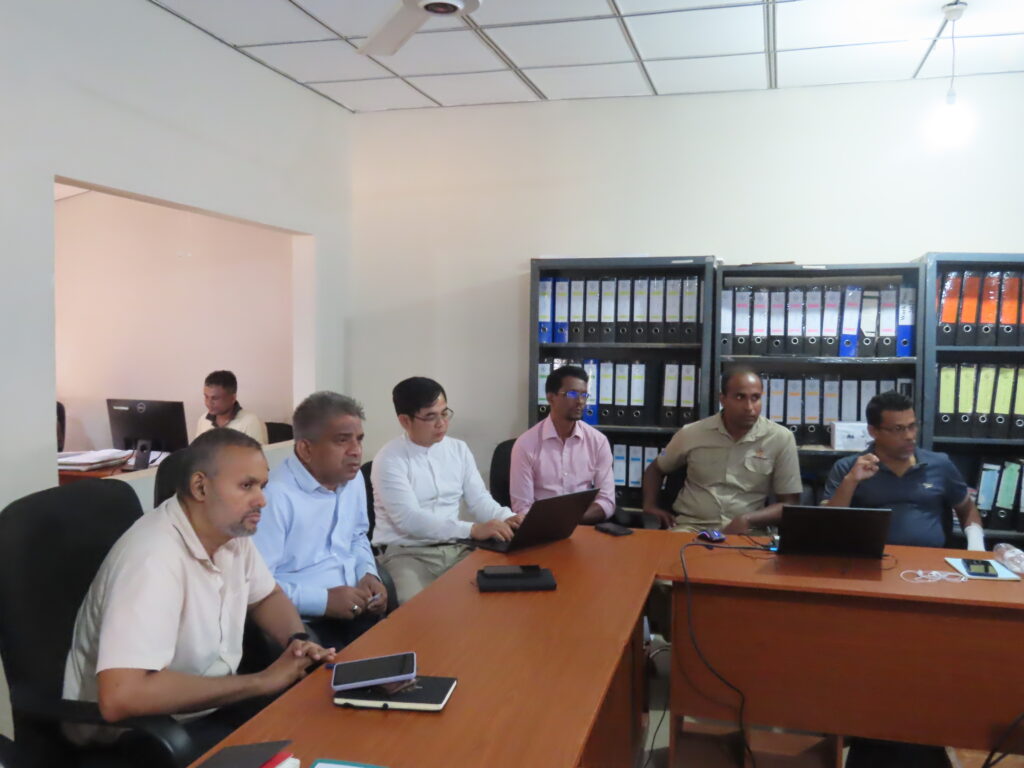
Gender Responsive Advancement & Operational Enhancement of Women De-miners On 27 March 2026, the National Mine Action Center (NMAC), through the Regional Mine Action Office (RMAO) in Kilinochchi, organized a special meeting with a UNDP delegation to review the proposed project supported by the Government of Japan. The meeting brought together Operations Managers of mine action organizations and key officials of the Regional Mine Action Office. During the session, UNDP representatives presented the proposed project activities and expected outputs, while NMAC emphasized the importance of aligning implementation with national mine action priorities and operational needs. The Government of Japan has committed USD 1,160,000 to support mine action efforts in Sri Lanka through a 12-month project focused on advancing gender-responsive approaches and strengthening the capacity of women deminers in the Northern and Eastern Provinces. The project, developed in close collaboration with NMAC and to be implemented by UNDP, aims to enhance national mine action capacity, ensure operational continuity in post-disaster contexts, and promote safer, more inclusive, and resilient operations in line with national priorities. Key interventions will include the introduction of advanced demining technologies and equipment, provision of personal protective equipment tailored for women deminers, establishment of mobile gender-responsive infrastructure, development of business continuity plans, support for non-technical surveys, and delivery of Explosive Ordnance Risk Education (EORE) for affected communities. UNDP and NMAC reaffirmed their commitment to working closely with relevant stakeholders to ensure the effective, efficient, and coordinated implementation of the project in support of national priorities.
Enhancing QM with Mobile Data Collection
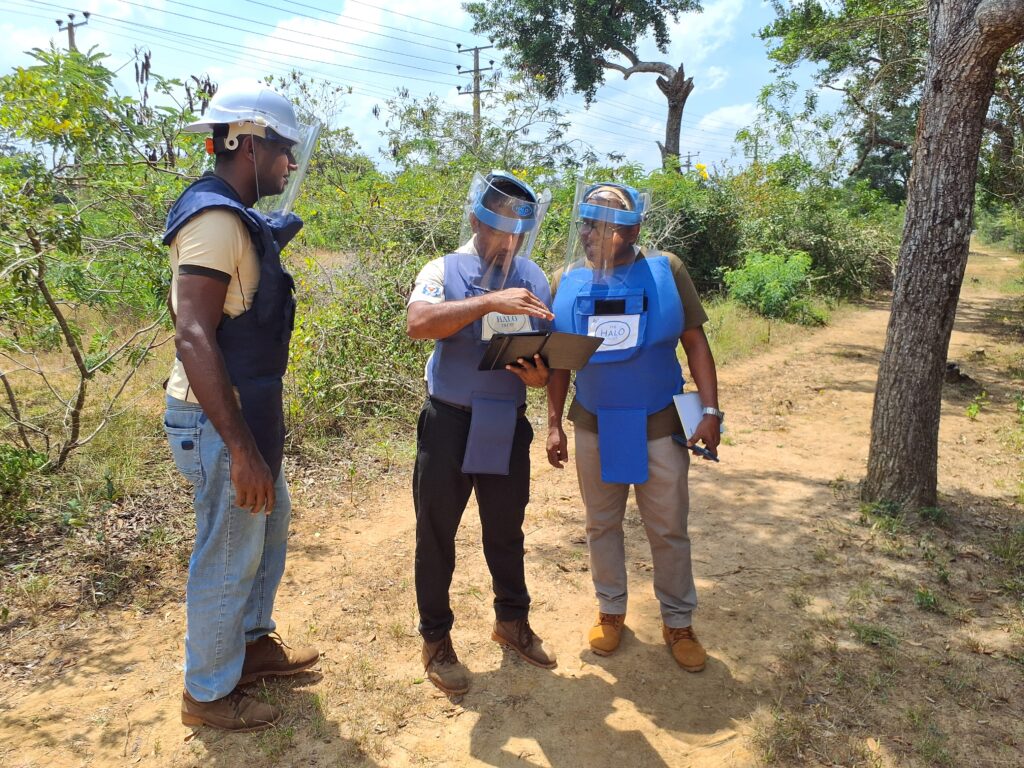
Enhancing Quality Management with Mobile Data Collection The Information Management (IM) activities of the Sri Lanka Mine Action Programme are fully supported by the United States Department of State through the Geneva International Centre for Humanitarian Demining, contributing significantly to strengthening national IM capacity. Quality Management (QM) continues to play a vital role in the land release process. With the support of GICHD and the National Mine Action Centre Sri Lanka, QM processes and data collection are being strengthened through the Survey123 mobile application. A pilot demonstration was successfully conducted on 30 March 2026 at the SHARP site in Thirumurukkandi. The session involved QM Officers under the supervision of the Senior QA Officer and the GICHD Information Management Advisor, with participation from the SHARP Operations Manager and team members. As part of ongoing improvements, NMAC has introduced the Survey123 QA form, which will be integrated into future QA activities at the Regional Mine Action Offices (RMAO). This initiative enhances real-time data collection, improves accuracy, and strengthens overall Information Management capacity. The Sri Lanka Mine Action Programme will continue to benefit from the ongoing support of the United States Department of State in further strengthening IM systems and operational effectiveness. This work is supported by the United States Department of State. This publication was made possible through support provided under the terms of Award No. PMWRA-23-GR-0009.
Elementor #14358
Enhancing QM with Mobile Data Collection Quality Management (QM) continues to play a vital role in the land release process. With the support of GICHD and NMAC, QM processes and data collection are being strengthened through the Survey123 mobile application. A pilot demonstration was successfully conducted on 30 March 2026 at the SHARP site in Thirumurukkandi, involving QM Officers under the supervision of the Senior QA Officer and GICHD IM Advisor, with participation from the SHARP Operations manager and the team. NMAC has taken a step forward by introducing the Survey123 QA form, which will be integrated into future QA activities at RMAO.
International Women’s Day 2026 Celebrating Female Demining Heroes of Kilinochchi
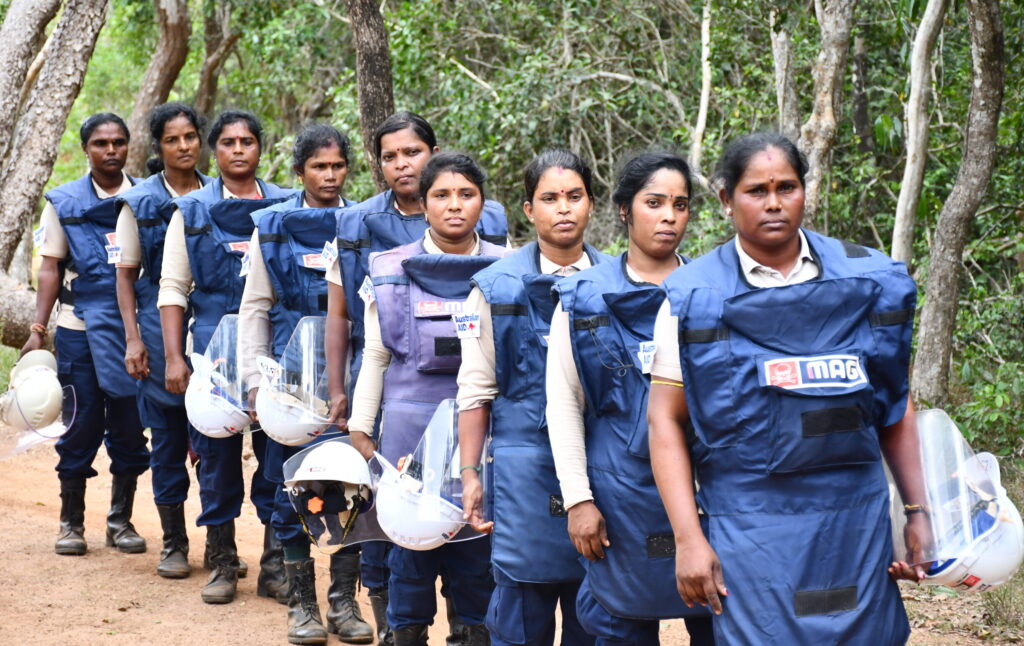
International Women’s Day 2026 Celebrating Female Demining Heroes of Kilinochchi On 13 March 2026, the District Secretariat Kilinochchi, in partnership with the District Women Federation, will host an International Women’s Day celebration. The event will be held at the District Secretariat kilinochchi with 350 women participants to mark the International Women’s Day observed by annually on 8 March celebrates the achievements and contributions of women worldwide. This collaboration aims to recognize and honor the contributions of women in the district, promote gender equality, and empower women’s leadership in community development. since the post-conflict areas women have played a vital role in rebuilding communities and ensuring safety. The target group for this event includes female demining workers in Kilinochchi, government and non-government officers, and members of women’s societies. Female demining workers in Kilinochchi have shown remarkable courage, resilience, and professionalism while working in high-risk mine and EO contaminated area. Their work directly supports community safety, resettlement, livelihoods, and long-term peace-building. This event aims to honor their contributions, amplify their voices, and recognize their role to host their Corrosive.
Handling Termite Mounds and Isolated UXOs During Mine Clearance in Forest Areas
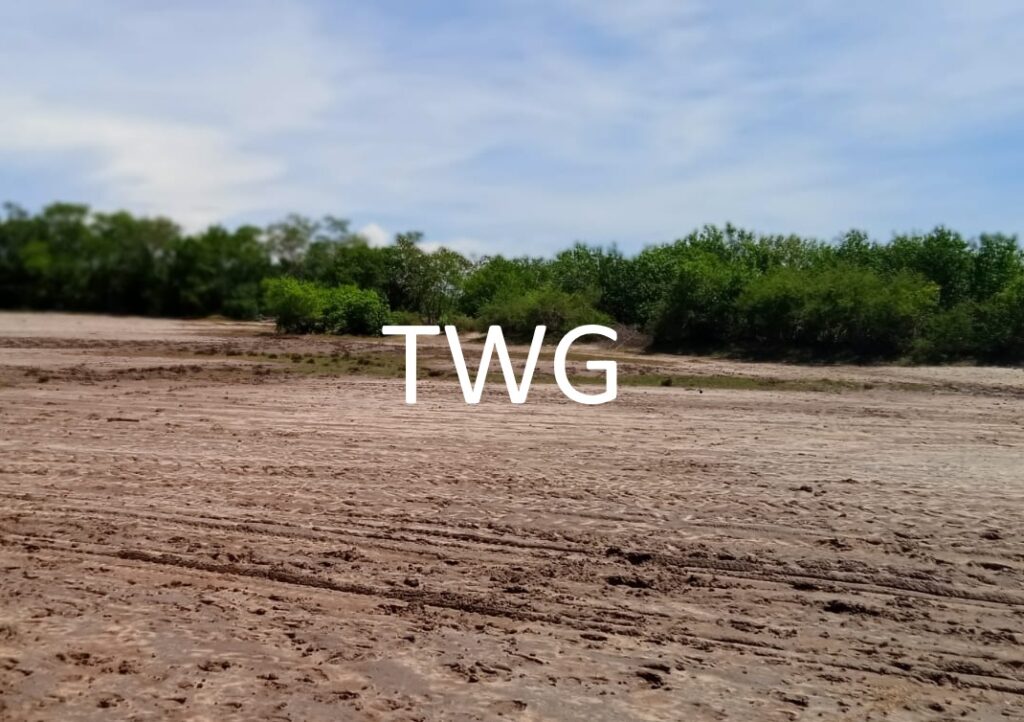
Handling Termite Mounds and Isolated UXOs During Mine Clearance in Forest Area The Technical Working Group (TWG) meeting will be held on 20 March at the Kokkuthuduwai mine clearance site, hosted by HALO in collaboration with NMAC. Participants will gather at a suitable location near Kohabagas Handiya (Junction), where approximately 20.The Director to the NMAC will welcome all the participants, and briefly explain the purpose of the TWG and its expectations. After the initial gathering, TWG will be held at the HALO’s Control Point. NMAC and RMAO will explain the TWG objectives and briefly outline SLNMAS, IMAS, and SOPs on termite hills and isolated UXOs. HALO and other operators will then share their experiences and challenges, such as the number of mines or UXOs found after excavation or in fade-away areas. After the discussion, participants will visit the selected locations to observe both cleared and ongoing clearance areas, particularly those involving termite hills. The aim is to demonstrate the operational difficulty of clearing such obstacles manually without mechanical assets and to assess the associated risk level. Over the field visit, NMAC and RMAO will present the relevant conditions and technical aspects, and operators will have the opportunity to present their field experiences in detail. The discussion will then be open to all participants for questions, observations, and recommendations. NMAC will also present suggested amendments to the relevant provisions of SLNMAS and seek feedback and suggestions from the TWG.
High-Level Government Visit to Minefield Site in Kilinochchi District
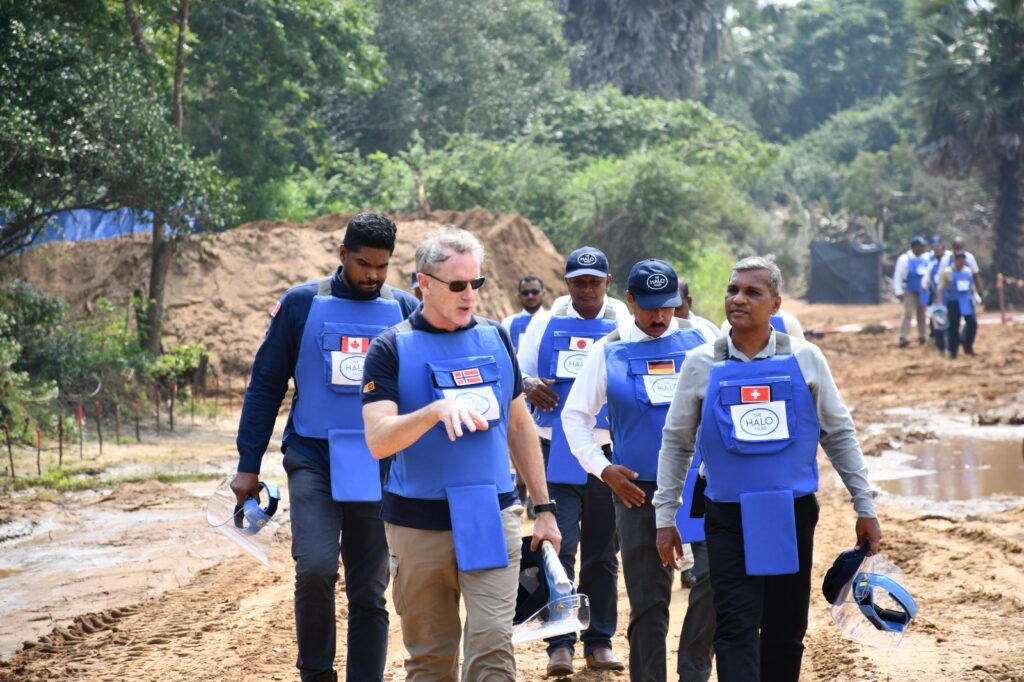
High-Level Government Visit to Minefield Site in Kilinochchi District Hon. Dr. H.M. Susil Ranasinghe, Minister of Housing, Construction and Water Supply, together with Eng. L. Kumudu Lal Bogahawatta Secretary to the Ministry, and other senior officials from the Ministry and the National Mine Action Centre (NMAC) and Regional Mine Action Office, Killinochchi (RMAO) , visited the minefield site at Muhamalai in the Kilinochchi District to observe the ongoing demining operations. The visit focused on mine-affected areas that were heavily contaminated during the conflict, particularly those located close to residential zones and cultivated lands in the Pachchilaipalli Divisional Secretariat Division. These areas are of high importance for community safety, resettlement, and livelihood restoration. This field visit was highly significant in demonstrating the Government of Sri Lanka’s strong commitment to mine action activities, implemented through the international organizations The HALO Trust and MAG, together with local implementing partners including DASH and SHARP, all of which are supported by donor funding, and the Sri Lanka Army Humanitarian Demining Programme, which operates under the Government of Sri Lanka and is funded by Government of Sri Lanka (GoSL) resources. The visit also stands as clear evidence of the success of Sri Lanka’s post-conflict resettlement programme, following nearly three decades of internal displacement caused by the conflict. The mine clearance programme, implemented by the Government of Sri Lanka, has been conducted systematically, technically, and in full compliance with both national and international mine action standards and procedures, ensuring safe and sustainable resettlement. During the visit, the Hon. Minister and the Secretary were briefed by the Programme Manager of The HALO Trust, who explained the current operational situation, key achievements, and challenges faced during mine clearance activities in the area. The Government reaffirmed its continued commitment to accelerating mine clearance efforts in close coordination with national and international partners, with the ultimate goal of ensuring safe communities, restored livelihoods, and long-term development in formerly conflict-affected regions.
Strengthening Mine Action in Sri Lanka: GICHD Engages with New Ministry Leadership
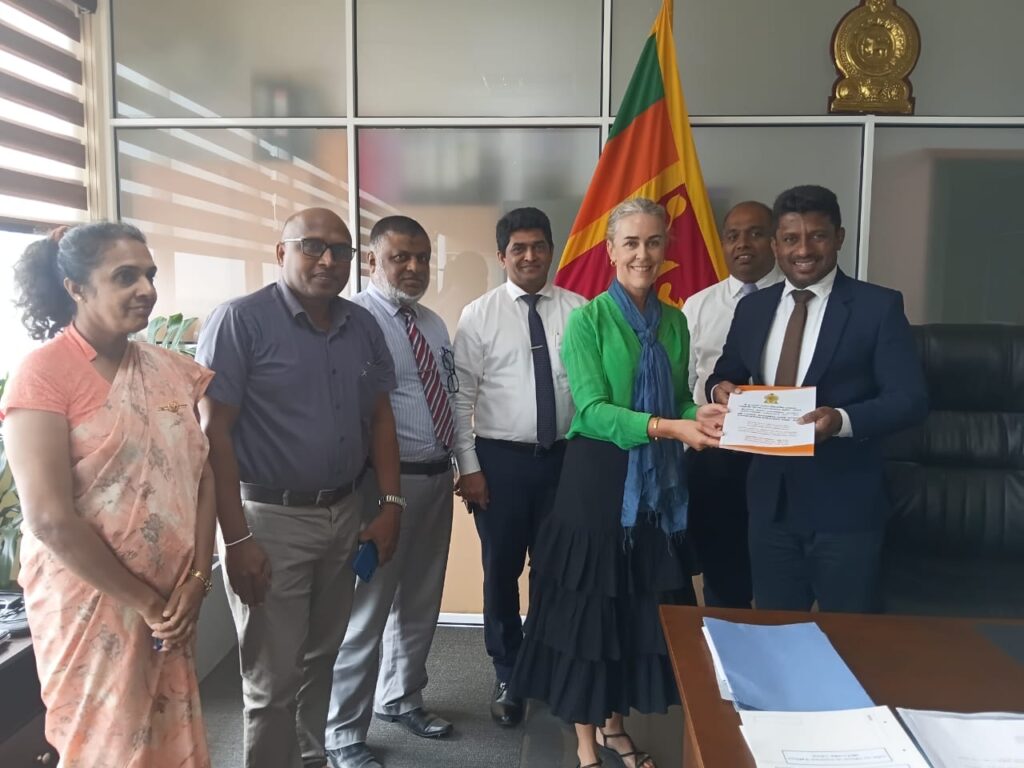
Strengthening Mine Action in Sri Lanka: GICHD Engages with New Ministry Leadership A delegation from the Geneva International Centre for Humanitarian Demining (GICHD), comprising Ms. Åsa Massleberg, Programme Manager and Senior Advisor for Strategic Planning, and Mr. Sri Mallikarachchi, Information Management Specialist seconded from GICHD to NMAC, met with the newly appointed Secretary to the Ministry of Housing, Construction and Water Supply, Eng. L. Kumudu Lal Bogahawatta. The purpose of the meeting was to introduce GICHD’s long-standing technical support to the Sri Lanka Mine Action Programme and to discuss current strategic priorities. During the discussion, the delegation highlighted GICHD’s engagement with Sri Lanka since 2010, emphasizing its contributions in national capacity-building, information management, and strategic planning. The reviewed Mine Action Completion Strategy 2023-2025 , its key strategic objective was presented. Progress in mine clearance and related activities was discussed, together with an overview of Sri Lanka’s national commitments under Article 5 of the Anti-Personnel Mine Ban Convention (APMBC) It was highlighted that, due to unknown or newly identified contamination and declining donor financial resources, it will not be possible for Sri Lanka to meet its Article 5 obligations by the current deadline of June 2028. Based on existing data, survey outputs, and ongoing completion survey findings, and as stated in the reviewed National Mine Action Strategy, Sri Lanka will submit an Article 5 extension request by March 2027. To support this, the Completion Survey dashboard and contamination mapping were presented, providing the Secretary and participants with a clear understanding of the current ground situation and the importance of timely decision-making. The meeting was also attended by Mr. M. H. M. P. Zameel, Additional Secretary, Mr. Jayasundara, Additional Secretary of the Ministry of Housing, Construction & Water Supply, and the Deputy Director for Mine Action Mr. Mahinda Wickramasingha and staff members of NMAC.
Sri Lanka Reaffirms Commitment to a Mine-Free Nation at the 22nd Meeting of States Parties
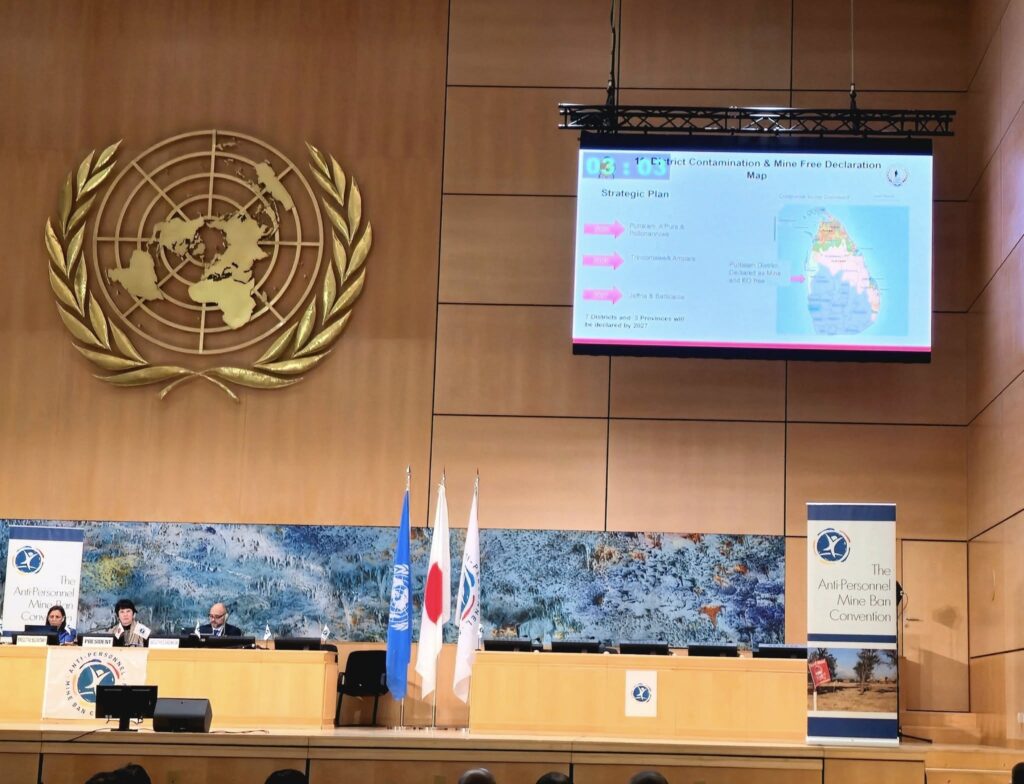
Sri Lanka presented its progress under Article 5 – Clearing Mined Areas, highlighting strong national leadership and a coordinated approach since joining the Anti-Personnel Mine Ban Convention in 2018. Guided by the Reviewed Mine Action Completion Strategy 2025–2027, the country has made significant strides, including launching one of its largest-ever Completion Surveys across 11 districts in 2023. While newly identified contaminated areas and funding limitations mean the current Article 5 deadline of June 2028 cannot be met, Sri Lanka remains fully committed to a responsible and evidence-based path toward completion. In line with Convention procedures, an Article 5 Extension Request will be submitted by March 2027. Sri Lanka expressed appreciation for the continued support of international partners—including GICHD, ISU, donor nations, and humanitarian demining organisations—as it works toward a sustainable, mine-free future that will unlock social, economic, and environmental opportunities for affected communities.